



For more than five decades, the City of Biloxi has maintained a minimum residential dwelling size of approximately 400 square feet. That may soon change following a recent request by Councilman Wayne Gray (Ward 1) to reconsider the City’s longstanding requirement.
During the 27 October 2026 Biloxi City Council Meeting, Gray questioned the City’s current minimum dwelling unit size of 390 square feet and suggested increasing it. Expressing concern about smaller homes being constructed alongside substantially larger residences, Gray stated, “It’s just not fair [for] somebody to build a 1,500 square foot house and somebody builds a 360 square foot house next door to him.” Gray subsequently tasked the Planning Commission with examining the City’s minimum dwelling size requirements and considering an increase.
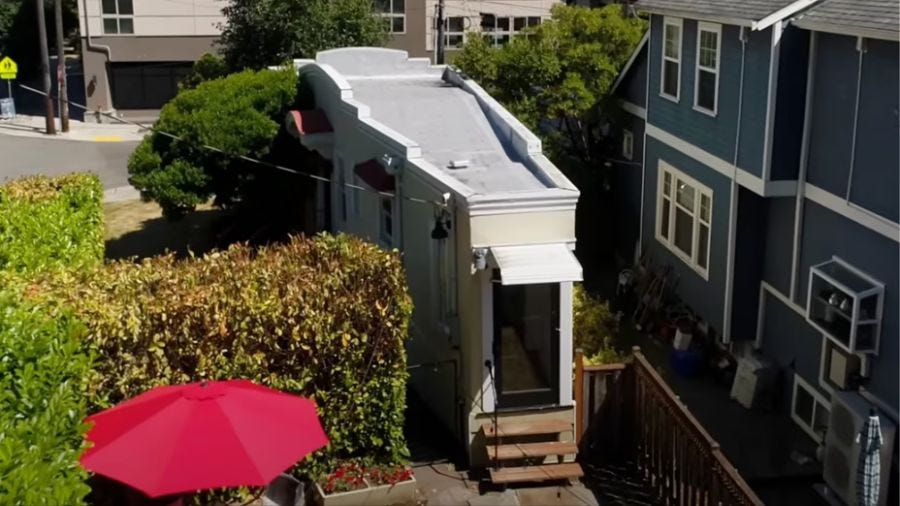
Biloxi’s minimum residential size requirement dates back more than 53 years. On 11 April 1973, the City adopted Ordinance No. 1141, signed by Mayor Daniel D. Guice following its approval on 16 March 1973. The ordinance represented a major overhaul of the City’s zoning regulations and established a minimum residential building area, stating: “Any building which is designed for or used exclusively for residential purposes...shall have a minimum area of 400 square feet.” That 400-square-foot minimum remained in place until 2010, when it was lowered to 390 square feet.
Minimum dwelling size requirements vary considerably among municipalities along the Mississippi Gulf Coast. Some cities have no citywide minimum, while others impose substantially larger requirements. Bay St. Louis, for example, requires dwelling units to contain at least 750 square feet unless a variance is granted. Other municipalities, such as Pascagoula, employ more complex standards that establish minimum dwelling sizes according to residential zoning classifications.
Under Pascagoula’s Unified Development Ordinance, the SFR-10 zoning district requires a minimum lot size of 10,000 square feet and a minimum dwelling size of 1,500 square feet. The SFR-8 district requires a minimum lot size of 8,000 square feet and a minimum dwelling size of 1,200 square feet, while the SFR-6 district requires a minimum lot size of 6,000 square feet and a minimum dwelling size of 1,000 square feet.
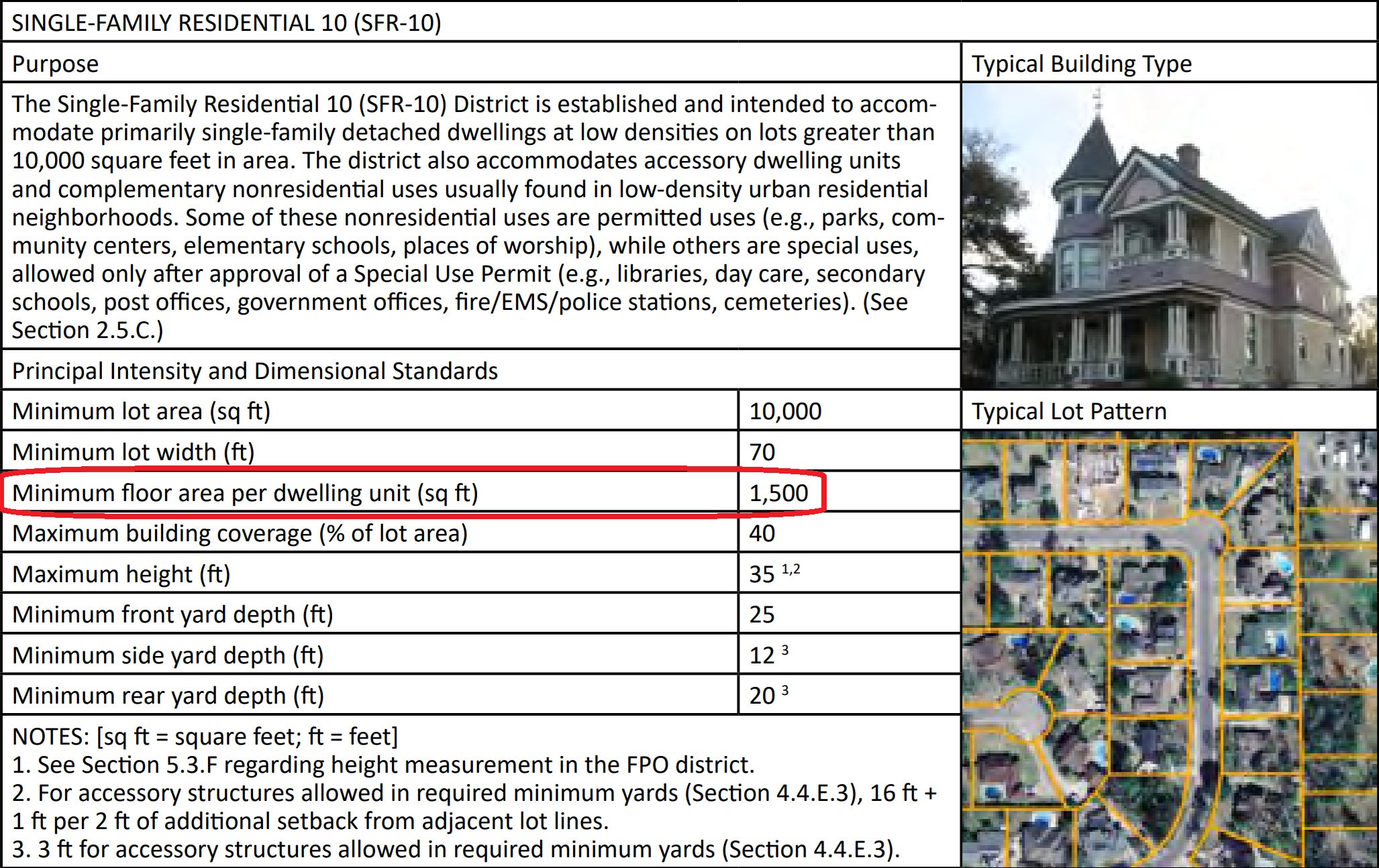
Applying a similar model to Biloxi, using a minimum dwelling size equal to 15% of the minimum lot size, would produce significantly different requirements from those currently in place. Biloxi’s RS-10 district, which requires a minimum lot size of 10,000 square feet, would have a minimum dwelling size of 1,500 square feet. The RS-7.5 district, with a minimum lot size of 7,500 square feet, would require a dwelling of at least 1,125 square feet, while the RS-5 district, with a minimum lot size of 5,000 square feet, would require a dwelling of at least 750 square feet. These figures are hypothetical examples, not proposed changes.
Community Development Director Jerry Creel explained that increasing Biloxi’s minimum dwelling size would require a text amendment to the LDO. Such amendments may be initiated by the Mayor, City Council, Planning Commission, or other designated City officials. The process includes staff review, public notice, and a public hearing before the Planning Commission, which forwards its recommendation to the City Council. If adopted by the Council, the ordinance is submitted to the Mayor for his signature or veto.
Although Gray has directed the Planning Commission to examine the issue, no formal amendment has been introduced, and no specific replacement standard has been proposed. The Commission’s review could eventually lead Biloxi to reconsider a residential size requirement that has remained virtually unchanged for more than half a century.
Whether any changes occur will depend on what the Planning Commission recommends, whether the City Council approves those recommendations, and whether the Mayor ultimately signs the ordinance into law.