


On 3 November 2026, a Jackson City Council meeting descended into chaos when Ward 3 Councilman Kenneth Stokes lost his temper during a debate over lifting the city’s moratorium on data centers. After a woman in the audience accused him of being willing to sell his mother for a dime, Stokes erupted, repeatedly shouting, “She talked about my mama!”
Stokes followed up with derogatory remarks about a Muslim women’s head coverings. The confrontation prompted chants of “Kick him out!” from the audience, police intervention, and a recess before the council ultimately postponed the remainder of its meeting.
Jackson City Council Meeting, Comments by Councilman Stokes (3 November 2026)
Order! Order! Whose in Charge Here?
When a meeting of government officials, including Biloxi’s own City Council meetings, descends into chaos, someone will often call out, “Point of order!” But where does this procedure come from and who decides whether the objection is valid? What authority does the council president have to silence a disruptive councilmember or remove someone from the audience? Can a councilmember challenge the president’s decisions, and who ultimately has the final say?
These questions extend well beyond what happened in Jackson and apply to council chambers across Mississippi, including Biloxi. The answers begin with a system of parliamentary procedure known as Robert’s Rules of Order.
From a Church Meeting to Robert’s Rules of Order
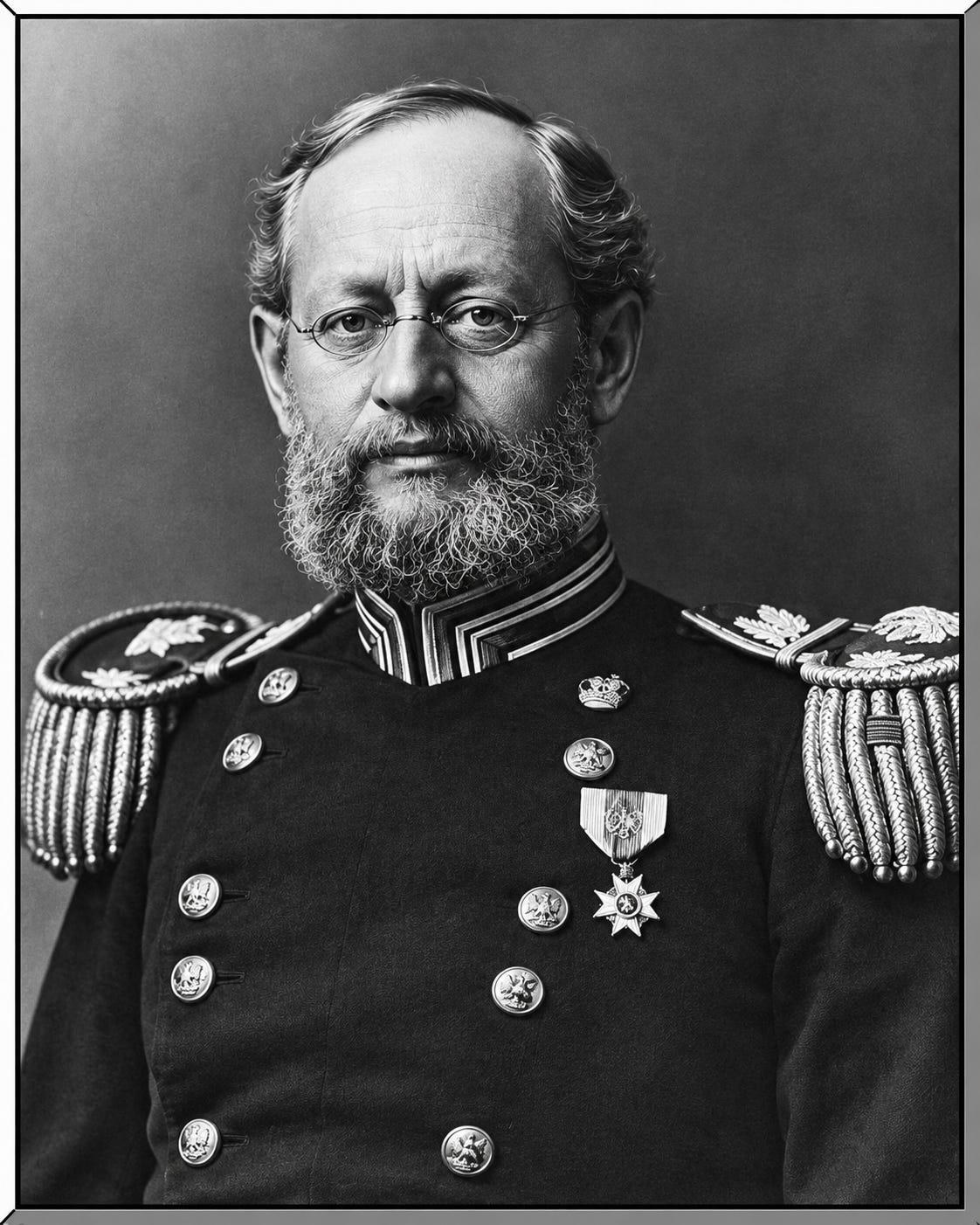
In 1863, Henry Martyn Robert, a U.S. Army engineer stationed in New Bedford, Massachusetts, was unexpectedly asked to preside over a church meeting. Unfamiliar with procedure, Robert struggled to conduct the meeting and was embarrassed. Determined to never to find himself in that position again, he began studying the rules governing formal meetings.
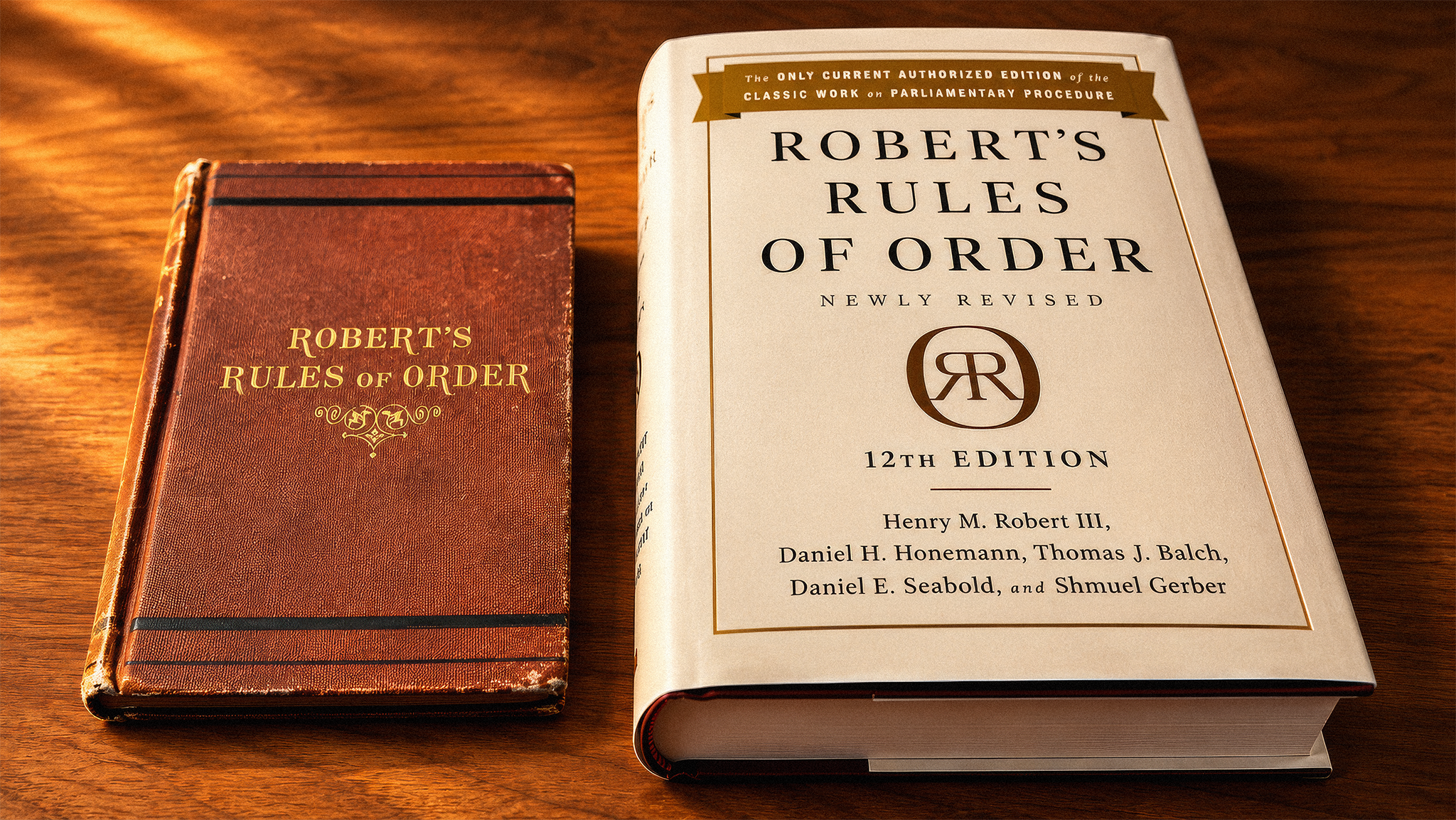
As his military career took him across the country, Robert discovered that organizations followed vastly different and even basic procedures. To establish a consistent system, he adapted the parliamentary practices of the United States Congress into a guide. In February 1876, he published the Pocket Manual of Rules of Order for Deliberative Assemblies, better known as Robert’s Rules of Order. The 12th edition, published in 2020 by his successors, remains the latest authorized edition, nearly 150 years after the original publication.
Biloxi City Council Enacted Robert’s Rules
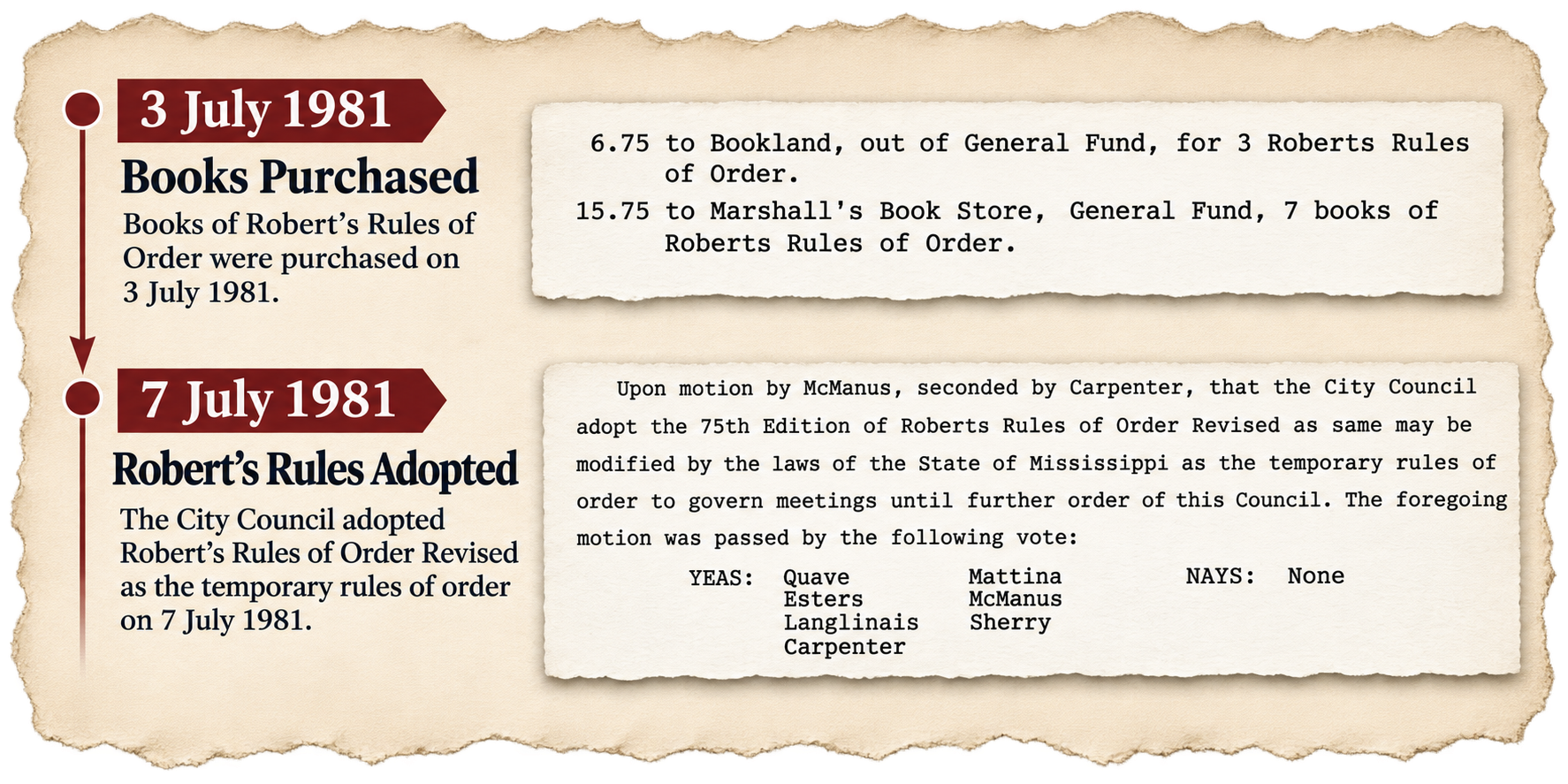
On 3 July 1981, the City of Biloxi purchased 10 copies of Robert’s Rules of Order for $22.50. Four days later, on 7 July 1981, the Biloxi City Council formally voted to adopt the 75th Edition of Robert’s Rules of Order Revised as its governing rules of parliamentary procedure, effective until further order of the Council.
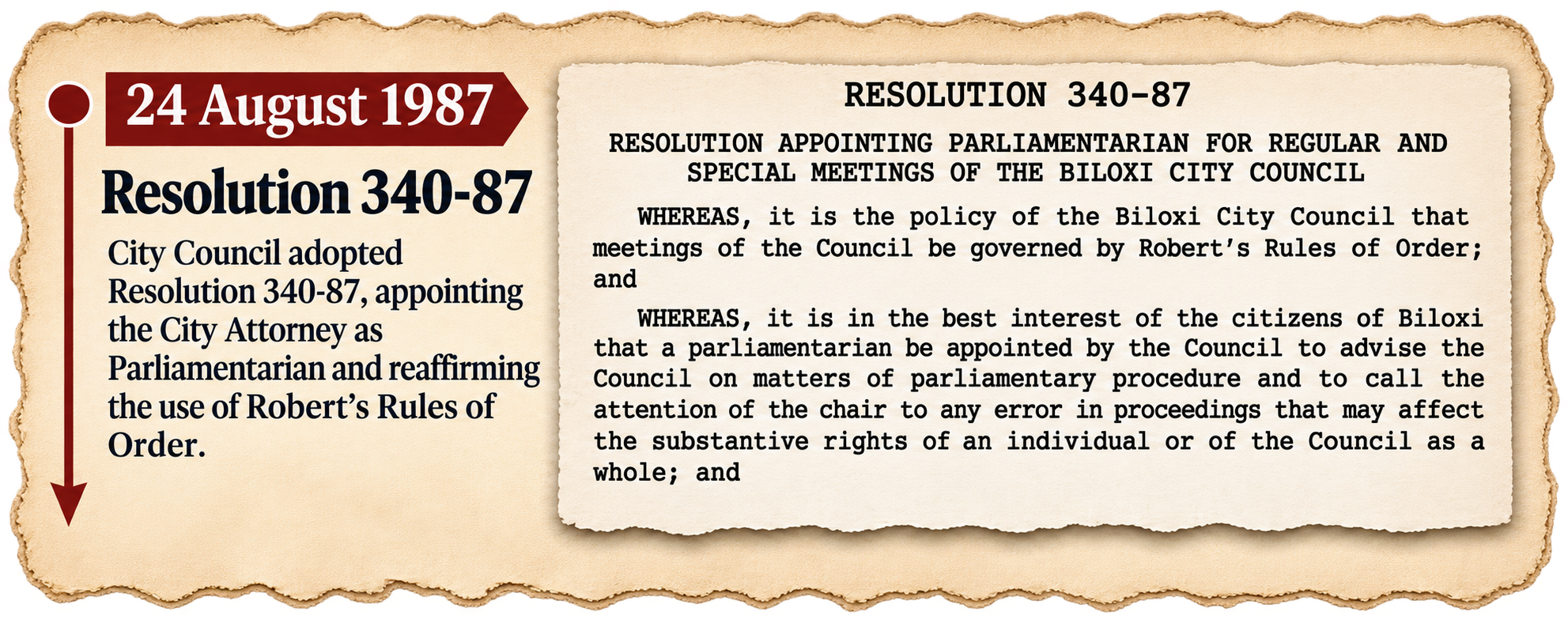
No subsequent order was issued by the Biloxi City Council adopting a different set of parliamentary procedures. In fact, on 24 August 1987, the City Council approved Resolution 340-87, designating the City Attorney as parliamentarian to advise the Council on proper meeting procedures. The resolution explicitly reaffirmed the Council’s commitment to Robert’s Rules of Order, beginning with: “WHEREAS, it is the policy of the Biloxi City Council that meetings of the Council be governed by Robert’s Rules of Order[.]”
Rules of Order, or Rules of Convenience?
Robert’s Rules of Order are intended to ensure that government meetings are conducted fairly, efficiently, and with respect for the rights of everyone involved. They establish procedures for debate, maintaining order, challenging rulings, and holding elected officials accountable to the same standards.
For more than 45 years, Biloxi’s City Council has operated under these rules, at least on paper. The question is whether those entrusted with conducting the public’s business actually understand and follow them, or whether parliamentary procedure is simply another set of rules enforced only when convenient.