


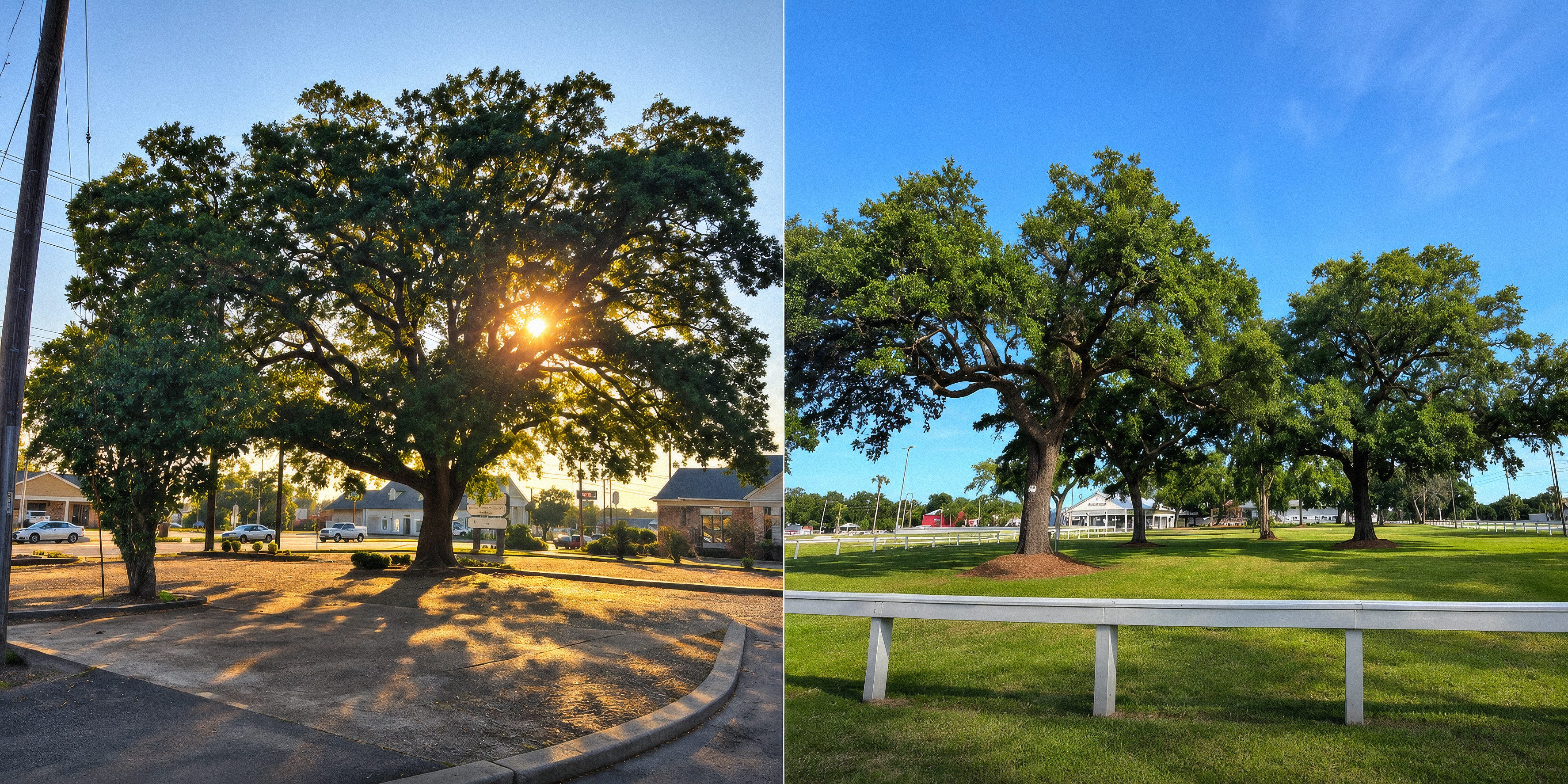
In Biloxi, homeowners are required to follow strict ordinances when it comes to removing trees, especially protected species like Live Oaks, Bald Cypress, and Southern Magnolia, but what happens when your insurance company demands the removal of a healthy protected tree? Can your insurance be canceled for complying with the law rather than the insurance company’s demand?
The short answer is no, not lawfully, when the tree has not been determined by a certified arborist to be a low risk according to accepted standards like those provided by International Society of Arboriculture. In fact, complying with Biloxi’s Tree Protection Ordinance may place you in direct conflict with your insurer’s demands, but that does not mean you are in the wrong. Homeowners facing this situation may have grounds to push back and report the insurer’s conduct to state regulators.
Biloxi’s Tree Permit Review Standards
A tree permit, which is required to remove a protected tree in Biloxi, shall only be approved upon a finding that at least one of the the Tree Permit Review Standards are satisfied:
A tree of any species is in danger of falling or damaging structures or utilities, or where the tree’s roots pose a significant threat of damaging utilities or structures.
A tree of any species that either encroaches into established easements, is a detriment to access, or obstructs required sight distances, as determined by the Director of Community Development.
The City Arborist or the Community Development Director provides written verification and photographic documentation that the tree is dead or dying.
The removal is necessary to comply with stormwater regulations, or to maintain public health and safety around utilities and infrastructure
The removal is necessary to address extraordinary circumstances such as weather-related emergencies and natural disasters, as determined by the Director of Community Development or the Mayor.
Requests for removal based solely on insurance company demands do not qualify under any of these criteria. A tree must present an actual, documented hazard or interfere with structures and/or infrastructure—not merely be considered undesirable or arbitrarily determined a risk by an insurance company.
What Is a TRAQ-Certified Arborist?
When the risk level of a tree is in question, a formal evaluation should be conducted by a TRAQ-certified arborist. TRAQ, which stands for Tree Risk Assessment Qualification, is a credential issued by the International Society of Arboriculture. If an insurance company is demanding the removal of a protected tree, the burden is on the insurer to provide evidence that the tree poses a legitimate risk. Without such documentation, the demand is arbitrary and may be subject to regulatory scrutiny.
These professionals are trained to assess the likelihood of tree failure and evaluate risk to people and property. Trees are categorized with an overall tree risk rating (using ISA’s Basic Tree Risk Asssessment Form) of:
Low Risk — Routine maintenance is sufficient. The tree is structurally sound and poses no immediate or foreseeable danger. No removal is necessary.
Moderate Risk — Pruning or targeted treatments are recommended. The tree may have minor defects or be located near vulnerable areas, but removal is not typically warranted.
Significant Risk — Removal is recommended most of the time. The tree has significant structural issues or presents a credible likelihood of failure that could result in harm or damage.
Extreme Risk — Immediate action to remove the tree is required. The tree poses an imminent threat to safety or property and must be addressed without delay.
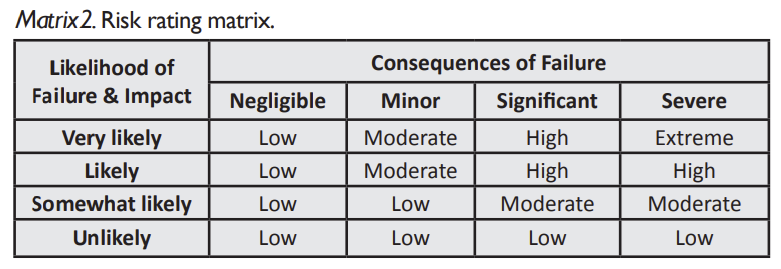
Tree removal permits should be approved when a qualified professional determines that a tree poses a high or hazardous risk, supported by proper documentation. Insurance companies can reasonably justify demanding removal in such cases, while their own risk acceptance standards may extend to moderate-risk trees. However, how does one justify allowing an insurance company to demand the removal of a legally protected tree that a qualified professional has determined poses only a low risk? Since when should an insurance company’s risk tolerance outweigh professional judgment and the very laws enacted to protect Biloxi’s trees?
When Insurance Demands May Violate the Law
Some homeowners have received letters from their insurers demanding the removal of a healthy tree under threat of policy cancellation. This places homeowners in a difficult position: comply with the insurance demand and violate the law, or follow the law and risk losing coverage.
Mississippi law prohibits insurance companies from canceling homeowner policies for arbitrary or unreasonable reasons, which is ingrained in the 9th right of the Mississippi’s Policyholder Bill of Rights. Canceling a policy because a homeowner refuses to violate a local ordinance could be considered bad faith or an unfair trade practice—especially when demanded without any actual risk being assessed.
The Mississippi Insurance Department (MID) is responsible for enforcing these standards and can investigate cancellation threats made arbitrarily in relation to protected trees. To file a complaint, visit www.mid.ms.gov or call 1‑800‑562‑2957 or (601) 359‑2453.
What Homeowners Should Do
Check with Other Insurance Companies
Before panicking or giving in to pressure, contact other insurance providers to see if they would insure your home without requiring tree removal. Many companies have different underwriting standards, and not all view mature trees as a liability—especially if the tree has not been professionally assessed as a risk. In many cases, you may be able to find coverage at a similar premium without sacrificing your tree. Knowing your options can strengthen your position and help you avoid making irreversible changes based on one insurer’s arbitrary demand.Request a Written Explanation
Ask the insurance company to provide a formal, written explanation of why they are demanding removal of the tree or threatening to cancel your policy. Request that they include any supporting documentationspecifically whether a certified arborist has evaluated the tree’s risk. If no such assessment has been performed, their demand lacks the professional basis necessary to justify action against you.Hire a TRAQ-Certified Arborist (If Necessary)
If the insurance company has not had a certified arborist assess the tree, consider hiring your own TRAQ-certified arborist to evaluate the risk level. If the tree is found to pose only a low or moderate risk, the arborist’s report can serve as key evidence that removal is not justified. If the insurer has already provided a certified assessment, review it carefully and consider seeking a second opinion if the findings appear exaggerated or unsupported.Notify the Insurance Company of the Law
Provide the insurer with the applicable sections of Biloxi’s Tree Protection Ordinance. Make clear that the City will not approve removal unless one of the five legal criteria is satisfied, regardless of insurance pressure.File a Complaint if Necessary
If the insurance company continues to pressure you or cancels your policy without proper justification, file a formal complaint with the Mississippi Insurance Department. The MID can investigate arbitrary cancellation threats related to protected trees. To file a complaint, visit www.mid.ms.gov or call 1‑800‑562‑2957 or (601) 359‑2453.
Insurance companies do not have the authority to compel homeowners to violate local law. If a tree is healthy, protected, and does not pose a documented hazard, it cannot be legally removed. Refusing to do so should not be used as a reason to cancel your insurance policy.
A TRAQ-certified arborist can help clarify whether a tree presents legitimate risk. If your insurer proceeds with cancellation regardless of local legal protections, the Mississippi Insurance Department can intervene. Compliance with the law is not only your right — it is your responsibility. No company has the authority to force you to break it.