


For nearly two centuries, a pier (or wharf) has been alongside Biloxi’s historic lighthouse, but only rubble remains at the site since Hurricane Zeta destroyed Biloxi’s historic Lighthouse Pier. As residents continue to question when this historic landmark will finally be restored, understanding what has been lost begins with a look back at its lengthy, remarkable history.
BEFORE THERE WAS A PIER
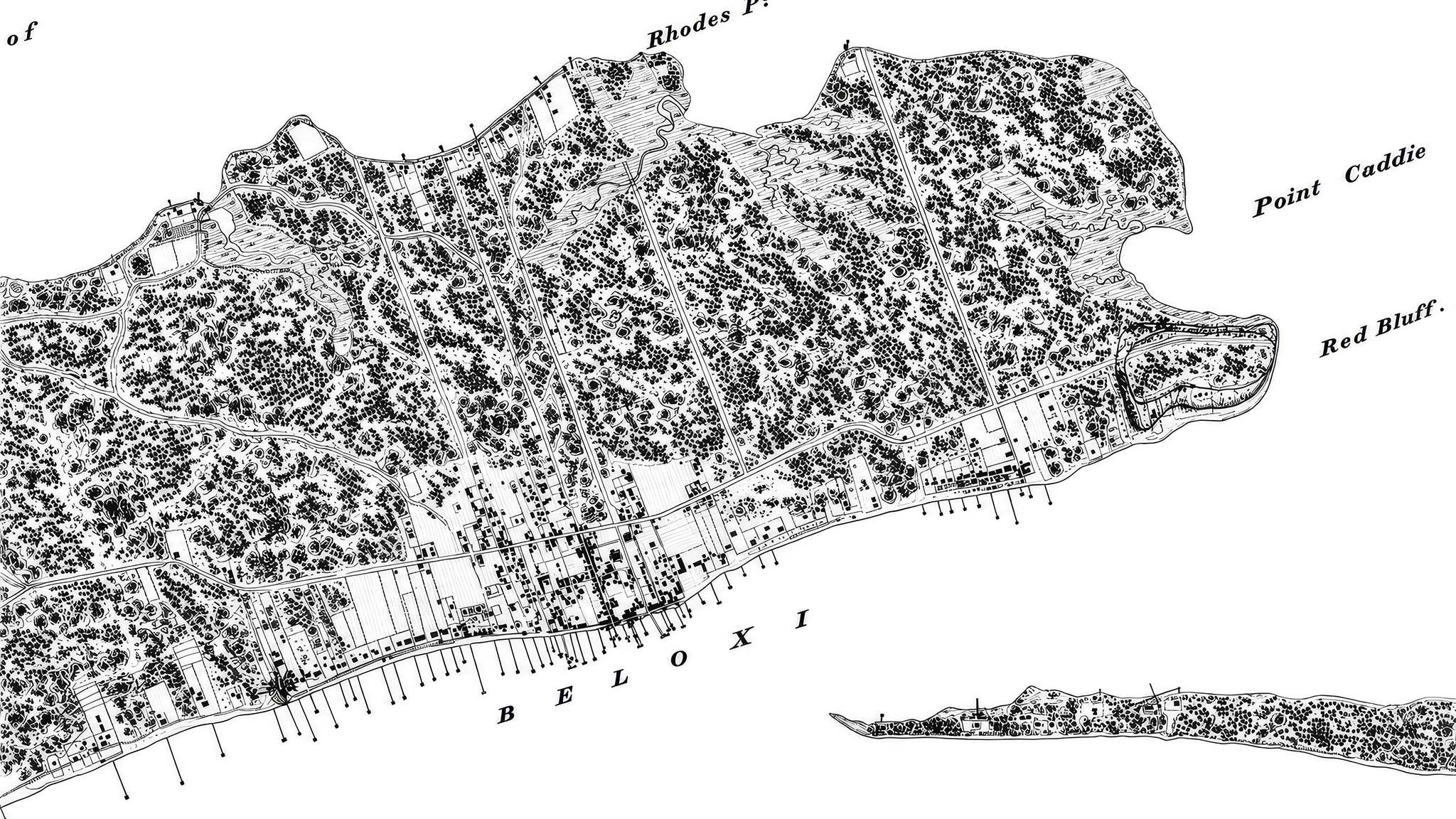
Biloxi’s Lighthouse was constructed in 1848, but wharves already lined the city’s waterfront at that time, including the shoreline surrounding the Lighthouse. Many were destroyed by a hurricane on 15 September 1860, with subsequent replacements suffering similar fates over the years. In 1902, a 900-foot wharf was constructed at the foot of Biloxi’s Lighthouse, as documented in that year’s Annual Report by the U.S. Lighthouse Board.

THE GOLDEN YEARS OF LIGHTHOUSE PIER
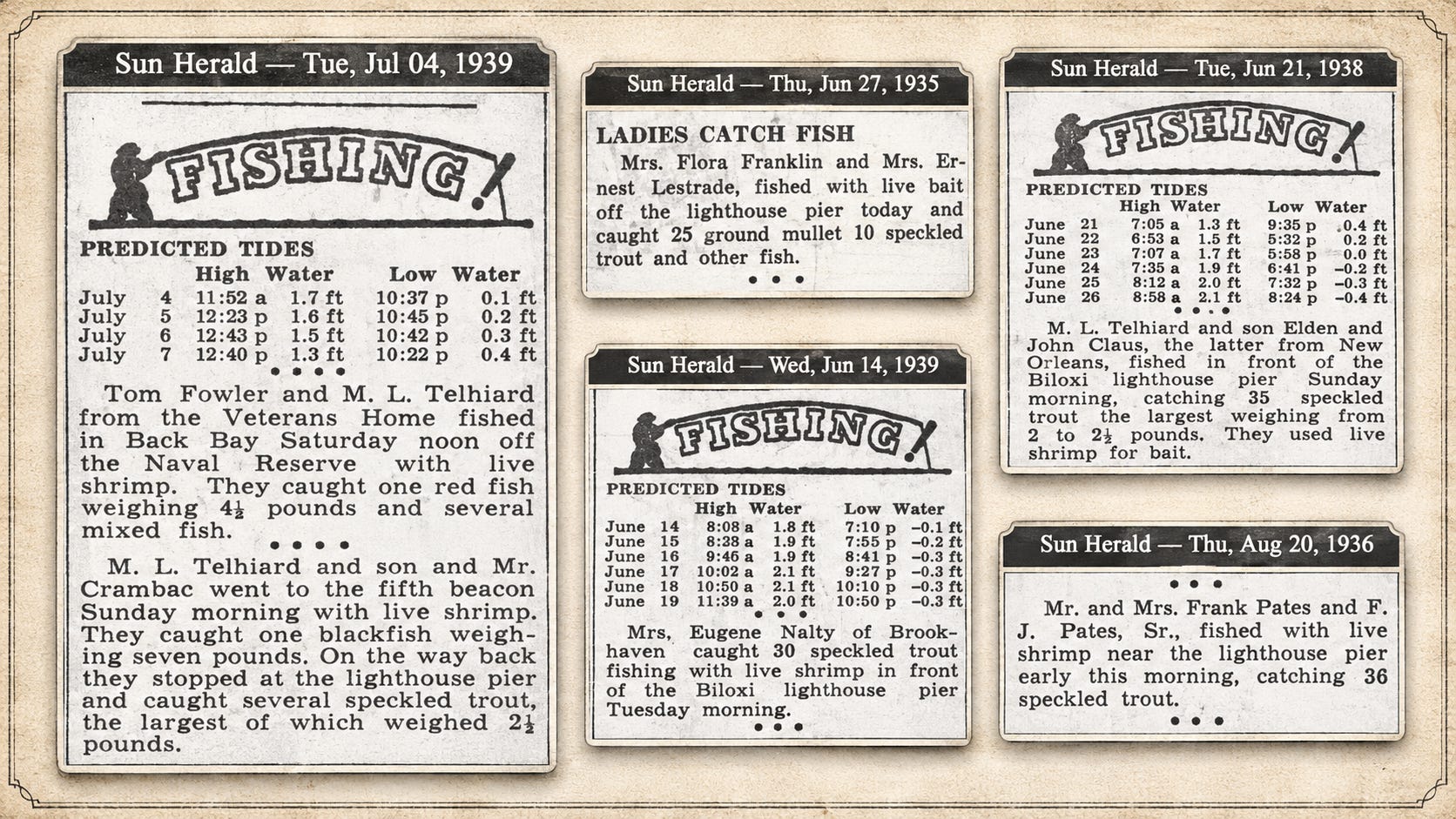
By the 1930s, the waterfront structure had become known as Lighthouse Pier and was a popular fishing destination for local residents, with newspapers regularly reporting their catches. On 20 August 1936, for example, Mr. and Mrs. Frank Pates Jr. and Frank Pates Sr. reportedly caught an impressive 36 speckled trout during a single morning of fishing at Lighthouse Pier. Such reports offer a glimpse into the pier’s popularity as a beloved and successful fishing spot for everyday Biloxians.
On 9 July 1947, Biloxi Businessmen’s Club met and went on record as favoring a plan for the City of Biloxi to acquire the Lighthouse Pier, which was then owned and maintained by the U.S. Coast Guard. Their vision was to transform the pier into a key component of the city’s park and recreational facilities to support the local community and tourism. Before the plan could take shape, however, the Fort Lauderdale Hurricane struck three months later, devastating the area and destroying the Lighthouse Pier.
THE MAN BEHIND THE PIER
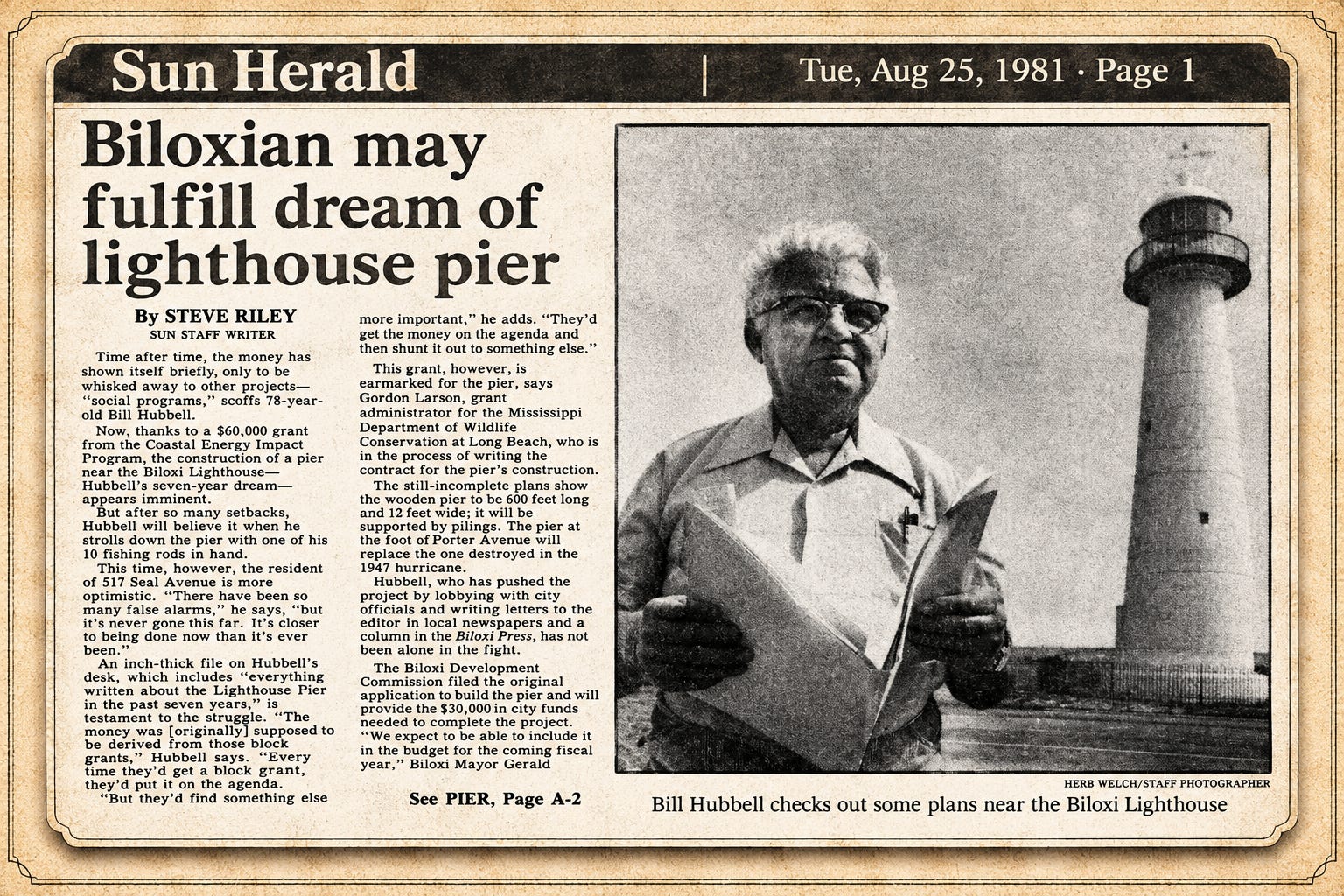
For the three decades that followed, the Lighthouse remained, but the pier that once stood on its waterfront did not. Then, in October 1974, William Hubbell attended a meeting at City Hall regarding community development funds from the U.S. Department of Housing and Urban Development (HUD). At the meeting, he proposed rebuilding the Lighthouse Pier under the ownership of the City.
Hubbell’s vision and efforts over the nine years that followed set the stage for the pier’s eventual revival. His dedication ultimately led to the rebirth of Lighthouse Pier, culminating in the completion of its construction and its dedication in Hubbell’s honor on 4 June 1983. Since its dedication in 1983, the Lighthouse Pier has undergone numerous repairs and reconstructions.
Following Hurricane Katrina’s destruction of the pier in 2005, Biloxi went without the pier for nearly five and a half years before it reopened in January 2011. However, Hurricane Zeta’s destruction of the pier in 2020 has now resulted in the longest period Biloxi has gone without the Lighthouse Pier since Hubbell’s pier was built in 1983.
PROMISES, PAPERWORK, AND FEMA
Following Hurricane Zeta, the City of Biloxi began planning yet another reconstruction of Lighthouse Pier. On 17 August 2021, the City Council authorized $1.7 million for reconstruction and a $336,000 professional services agreement with Seymour Engineering. By 26 May 2022, Seymour Engineering had submitted a permit application to the Mississippi Department of Marine Resources estimating the project at $3.3 million, with construction scheduled between September 2022 and May 2023. Those dates have long come and gone.
Under Mayor Andrew “FoFo” Gilich, the project has evolved into an elaborate, storm-resistant pier featuring concrete pilings, flow-through decking, and a 320-foot stone breakwater. By September 2025, Gilich estimated that the cost could be “$5 million by the time the smoke clears,” with “at least half of that amount...paid for by FEMA.” FEMA disputes additional funding for improvements beyond replacing the pier as it previously existed. After years of negotiations and appeals, construction of a replacement pier has yet to begin.
NO IMPACT STRATEGIES
Throughout the dispute, Biloxi paid City Lobbyist Brian Keith Heard of Key Impact Strategies $8,000 a month for work that included pursuing federal assistance and addressing FEMA funding issues. Heard also received approximately $50,833 monthly from other governmental entities and organizations, bringing his combined annual compensation as a lobbyist to $705,996. Despite years of lobbying, appeals, and trips to Washington, the City still has not secured the funding needed for the Mayor’s proposed $5 million pier and Heard's contract ended on 30 September 2026.

BUILD IT BACK (BETTER?)
During a City Council meeting on 6 January 2026, Mayor Gilich and CAO Rick Weaver discussed moving forward with a basic pier design and adding improvements only if funding allowed. Councilman Jamie Creel (Ward 4) opposed continued delays, questioning the administration’s reliance on the hope of additional FEMA funding. The following day, Creel publicly indicated to WLOX that bids would go out in February 2026, with construction expected to take approximately one year, but the promised bidding never occured.
During the 6 October City Council meeting, officials again reported that engineering plans were essentially complete, but construction bidding still depended on FEMA’s hazard-mitigation decision and the final scope of the project. CAO Weaver reported that approximately $188,580 had already been spent on engineering design, while officials discussed potentially moving toward bidding within another four to six weeks if the funding dispute remained unresolved.
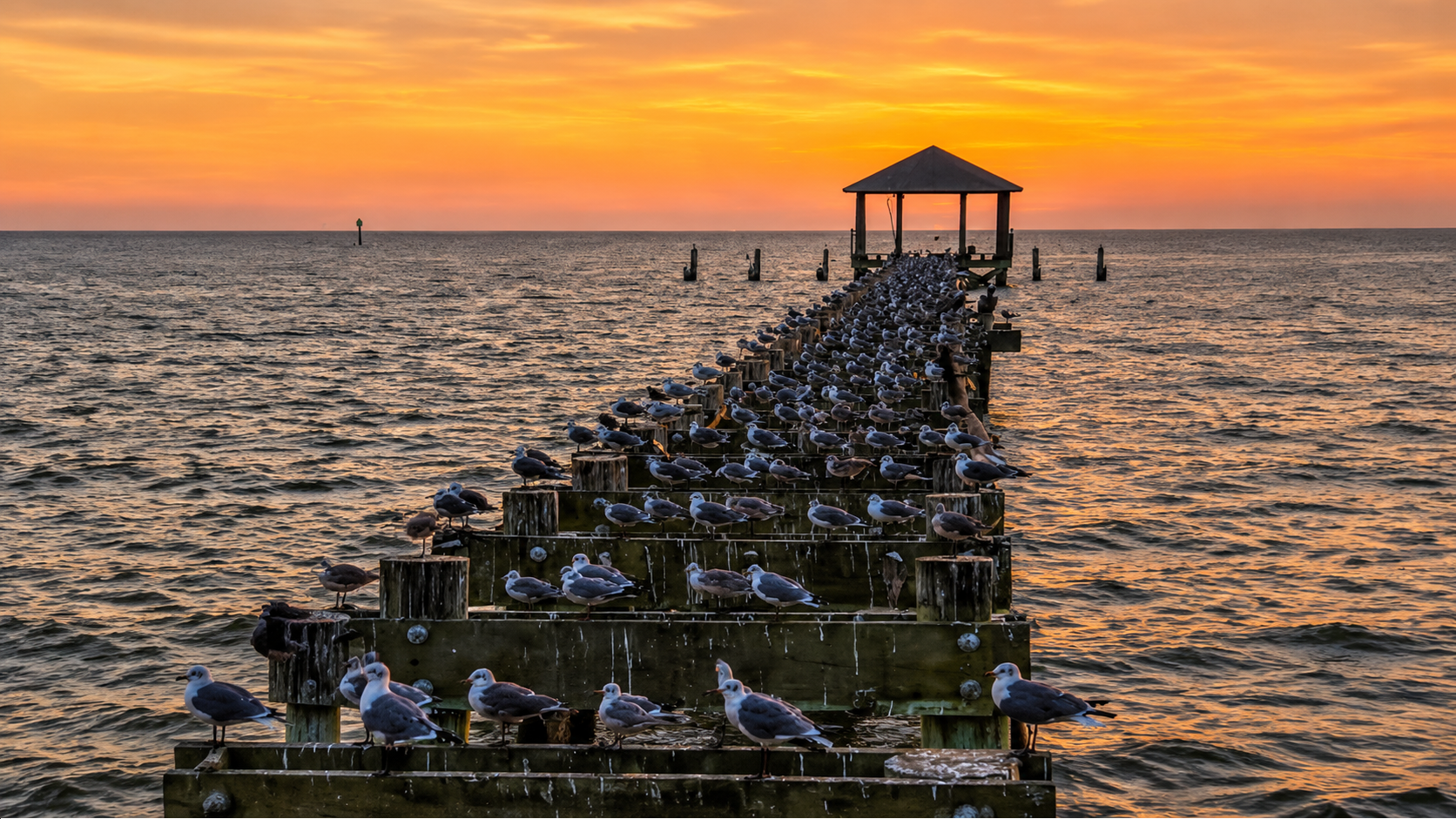
Biloxi’s residents have been left to wonder: How long should residents be expected to go without a historic public amenity? Mayor Gilich has defended his effort to build a stronger, more resilient pier capable of surviving future hurricanes, but the result remains unchanged—no pier construction. The same waterfront where William Hubbell fought to restore a community landmark more than four decades ago remains a pile of rubble.
Agreed - but it's a matter of funds. The city has cut the library budget to where there's little money to buy nerw books this year. We need the rest of the FEMA grant we were promised, but the nation is deeply in debt and people cannot afford to pay higher taxes.